Kolmanskop in Namibia: Desert Ghost Town Guide
Explore Kolmanskop in Namibia, a haunting abandoned diamond-mining town reclaimed by the Namib Desert. Complete guide with history, visiting tips from Lüderitz, photography advice, and safety notes.
Kolmanskop in Namibia: The Complete Guide to the Desert Ghost Town (History + How to Visit)
This guide gives you the full picture in one place—what Kolmanskop is, why it’s famous, what you’ll actually see, and how to plan a smooth visit from Lüderitz, including practical tips for safety and photography.
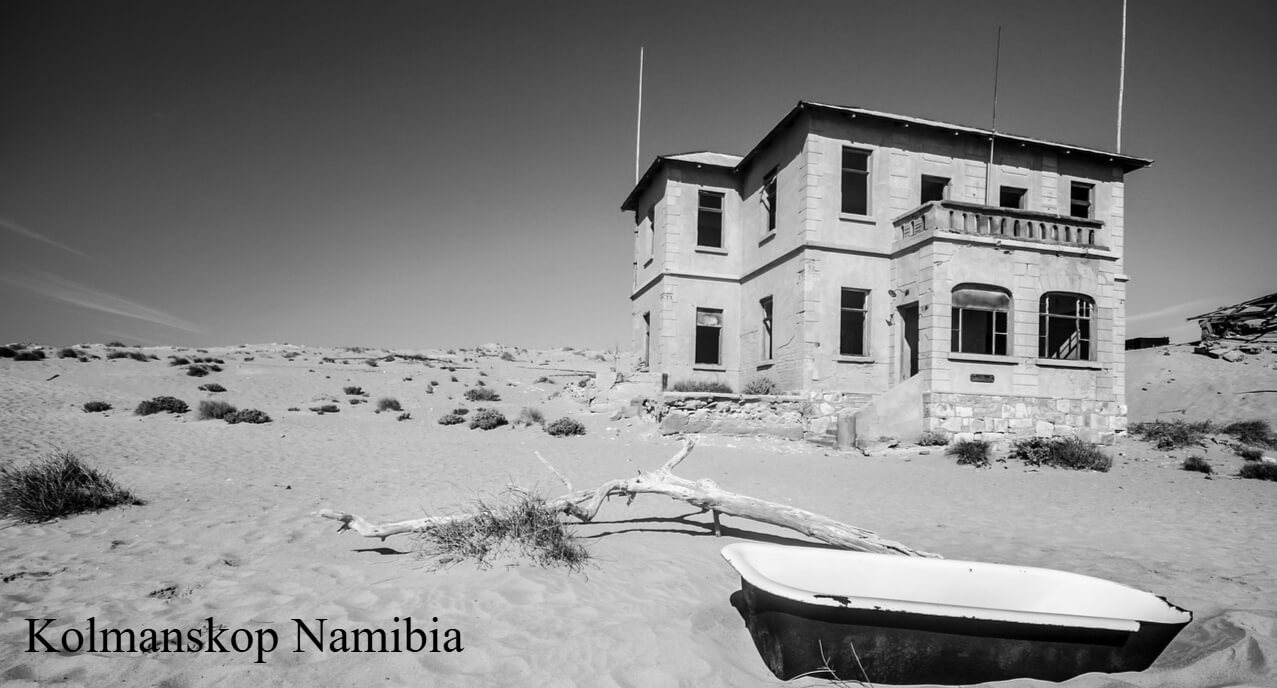
Kolmanskop in Namibia (often spelled “Kolmanskuppe”) is one of the most hauntingly beautiful places in southern Africa: an abandoned diamond-mining town slowly being reclaimed by the Namib Desert.
If you’ve seen photos of doorways filled with dunes and sunlit sand draped across staircases, chances are they were taken here.
What is Kolmanskop Namibia—and why is it famous?
Kolmanskop is a ghost town a few kilometers outside the coastal town of Lüderitz in southern Namibia. It rose quickly during a diamond boom in the early 1900s and fell just as fast when diamond fortunes shifted elsewhere.
Today, it’s famous because:
- The buildings are remarkably intact for an abandoned town.
- Wind-blown sand has poured into rooms for decades, creating surreal interiors.
- It offers a rare, tangible look at a colonial-era “company town” built for mining wealth.
- It’s one of Namibia’s most iconic photography locations.
The atmosphere is part museum, part open-air film set, part cautionary tale about boom-and-bust resource towns.
A short history: diamonds, desert, and abandonment.
Kolmanskop’s story is inseparable from Namibia’s diamond history and the German colonial era.
In the early 20th century, diamonds were discovered in the region, triggering intense interest and rapid development. Kolmanskop became a purpose-built settlement for workers and administrators connected to diamond mining.
Like many resource towns, it was designed to be comfortable—especially by desert standards—with substantial houses and community facilities that feel unexpectedly “European” against an arid landscape.
But diamond fields don’t stand still. Over time, mining focus and profitability shifted, and maintaining a fully functioning town in a harsh, sandy environment made less and less sense.
Residents left, services closed, and the desert began its quiet takeover. With each windy season, more sand moved in—through broken windows, under doors, and along corridors—until the town became the half-buried icon travelers visit today.
Where is Kolmanskop Namibia?
Kolmanskop in Namibia sits just outside Lüderitz, a small coastal town in southern Namibia. Most travelers base themselves in Lüderitz and visit Kolmanskop as a short day trip (often just a few hours on-site).
Because it’s close to town, Kolmanskop is commonly included in a wider southern Namibia itinerary, especially for travelers driving between the Namib desert region and the south (or continuing toward Fish River Canyon).
How to get to Kolmanskop
(from Lüderitz and beyond)
From Lüderitz:
- Self-drive: The simplest option if you have a car. The route is short and well-known as a local attraction. You’ll follow signage toward the Kolmanskop area and enter via the official access point.
- Tour/guide: If you prefer context and less planning, a guided option can be worthwhile—especially if you want a structured experience, safety reminders, and historical details while walking through buildings.
From elsewhere in Namibia:
- Most independent travelers reach Lüderitz by road, then do Kolmanskop as a half-day add-on. If you’re planning a longer route, treat Lüderitz + Kolmanskop as a “cluster” that typically needs at least one overnight in Lüderitz to avoid rushing.
How to visit Kolmanskop Namibia
(tickets, tours, rules)
Kolmanskop is managed as a controlled visitor site rather than a free-roam abandoned town. In practice, this means you typically:
- Arrive during official visiting hours.
- Pay an entry fee.
- Follow site rules designed to protect fragile structures and keep visitors safe.
Important note about prices and opening hours:
Ticket prices, opening times, and tour schedules can change seasonally. For the most accurate, current details, check the official Kolmanskop (Kolmanskuppe) tours information close to your travel date or confirm through your Lüderitz accommodation. This is especially important if you’re timing sunrise/special photo access.
How long to spend:
- Quick visit: 1–2 hours (highlights + a handful of photo spots)
- Comfortable visit: 2–4 hours (time for slower exploring, better photos, and museum-style reading if available)
What you’ll see and experience inside
the ghost town.
The main draw is walking through the old neighborhood streets and entering buildings where sand has accumulated like indoor dunes. Expect:
- Sand-filled rooms: Iconic scenes where dunes rise to window height, with strong lines and soft textures.
- Peeling paint and weathered wood: Great for close-up detail shots.
- Long corridors and door frames: Perfect for framing photos with layered doorways.
- Public buildings and homes: The town layout makes it easy to imagine daily life—until you notice how completely silence has replaced it.
Because structures are old and vulnerable, you may find certain rooms closed or restricted. That’s normal and often necessary for safety and preservation.
Photography tips for Kolmanskop in Namibia
Kolmanskop is a dream location, but it rewards planning. A few practical tips:
1) Go early or late for light and mood
Lower sun angles create better contrast and texture on sand ripples and through windows. Midday can be harsh and flatten shadows.
2) Bring a wide-angle lens (or use your phone’s wide lens)
Many of the most striking scenes happen in tight interiors where you’ll want to capture the full room plus the dune shape.
3) Expect sand—protect your gear
Wind can blow grit into cameras and lenses. Carry a simple cloth, avoid changing lenses in windy rooms, and keep a bag zipped.
4) Use doorframes and windows as compositional anchors
The town is full of natural frames. Stand back, align frames, and let the dunes lead the eye.
5) People can add scale (if allowed and respectful)
A person in a doorway can show how deep the sand is—just keep it safe and avoid climbing on unstable surfaces.
Safety and responsible tourism (what not to do)
Kolmanskop is photogenic, but it’s still an abandoned environment. To visit responsibly:
- Don’t climb on roofs, beams, or unstable staircases.
- Avoid touching or removing objects—leave the site as you found it.
- Respect barriers and closed areas (they exist for real safety reasons).
- Watch for broken glass, exposed nails, and unstable floors.
- Be mindful of wind and blowing sand—eye protection can help on gusty days.
- Stay on permitted paths/areas to reduce damage to fragile structures and surrounding desert.
Best time to visit Kolmanskop in Namibia
In general:
- Morning and late afternoon are best for photography and comfort.
- Wind conditions vary—if it’s very windy, the experience can be more challenging (but also more dramatic for atmosphere).
- Cooler months are often more comfortable for walking around, especially if you’re combining Kolmanskop with other outdoor stops around Lüderitz.
How to fit Kolmanskop into a Lüderitz day (simple itinerary ideas)
Half-day plan (easy and popular):
- Early morning: Visit Kolmanskop for the best light and fewer people.
- Late morning: Breakfast/brunch in Lüderitz.
- Afternoon: Explore Lüderitz viewpoints and coastal scenery.
Full-day plan (slower pace):
- Morning: Kolmanskop visit + photography.
- Midday: Lüderitz town exploration (architecture, harbor area).
- Late afternoon: Nearby coastal stops and sunset views (weather permitting).
This approach keeps the “must-see” (Kolmanskop) anchored in the best time window while leaving the rest of the day flexible.
Why Kolmanskop Namibia is worth it.
Kolmanskop isn’t just an abandoned town—it’s a visual story about human ambition meeting a powerful landscape.
The desert doesn’t destroy the place so much as transform it, room by room, into something both unsettling and beautiful.
Whether you come for history, atmosphere, or photography, visiting Kolmanskop Namibia is one of those travel moments that stays vivid long after the sand has been brushed off your shoes.
Subscribe to my newsletter.

Recent Articles


-
Cheap Airline Tickets to Namibia Guide | Namibia Travel Tips
Dec 31, 25 04:44 AM
 Find cheap airline tickets to namibia plus expert tips on routes, seasons, and self-drive safaris for an unforgettable, budget-savvy adventure.
 -
About Hans
Dec 31, 25 04:42 AM
About Hans -
Kolmanskop in Namibia: Desert Ghost Town Guide
Dec 30, 25 04:14 AM
 Explore Kolmanskop in Namibia, a haunting abandoned diamond-mining town reclaimed by the Namib Desert. Guide with history and Lüderitz visiting tips.